G-EMV: Emotion and Reason in an Agent. When Thinking Is NeededG-EMV: emoción y razón en un agente. Cuándo hace falta pensar
Independent researcher, BarcelonaInvestigador independiente, Barcelona
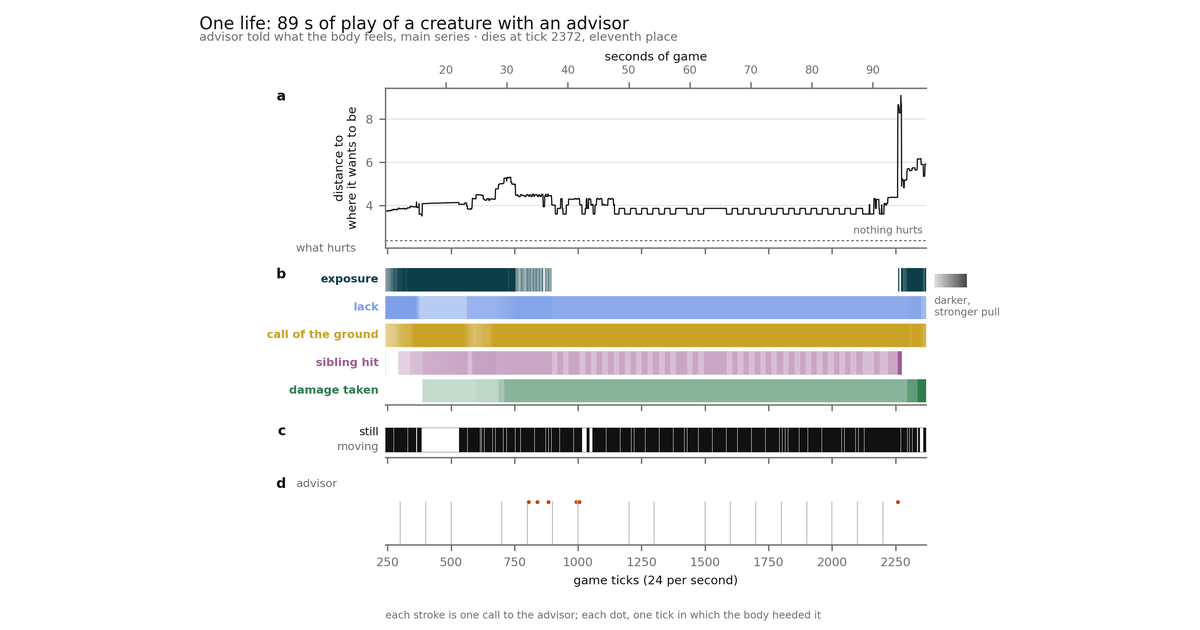
When is thinking needed? A body that decides twenty-four times a second, with no reward and no learning, has spent three works living in worlds not its own, guided only by what hurts it, what relieves it and what attracts it. Here a head that talks is set beside it, a language model that reads the scene and a manual of the world and proposes in words, and what it adds is measured. The body keeps the last word: each proposal enters its list of imagined futures as one more, scored with the same table. Over a hundred and thirty games in ZERO-SUM, a Softmax world whose scoreboard pays for surviving and for killing, the head spoke once every four seconds and the body heeded one proposal in ten; half of those times, to do what it was already going to do. Neither placing nor points moved beyond the noise. Telling it more, in four ways, changed what it said and not what the body did with it; asked what the others would do, it lost to assuming that nobody moves. The one thing that changed something was the clock: holding its sentence back four seconds halved the times it was heeded, almost three deviations, and a voice proposing reachable places at random was accepted at a similar rate. The answer this work gives is about the world as much as about the head: in a place where some threat is always lit, where every decision lasts forty milliseconds, where no one can be recognised from one game to the next and there is no tomorrow, there is nothing to deliberate about, and a head that cannot look again always arrives late. Thinking needs time: a breather without threat, someone to recognise, and decisions whose effect arrives later than the next look. That world has not been built here; what has been measured, in this one, is each of the features it lacks. The limits, above all that the gate through which advice enters cannot pass a plan, are stated in full.
¿Cuándo hace falta pensar? Un cuerpo que decide veinticuatro veces por segundo, sin recompensa ni aprendizaje, lleva tres trabajos viviendo en mundos ajenos guiado solo por lo que le duele, lo que le alivia y lo que le atrae. Aquí se le pone al lado una cabeza que habla, un modelo de lenguaje que lee la escena y un manual del mundo y propone en palabras, y se mide qué le añade. El cuerpo conserva la última palabra: cada propuesta entra en su lista de futuros imaginados como una más, puntuada con la misma tabla. En ciento treinta partidas de ZERO-SUM, un mundo de Softmax cuyo marcador paga por sobrevivir y por matar, la cabeza habló una vez cada cuatro segundos y el cuerpo le hizo caso en una propuesta de cada diez; la mitad de esas veces, para hacer lo que ya iba a hacer. Ni el puesto ni los puntos se movieron más allá del ruido. Contarle más, de cuatro maneras, cambió lo que decía y no lo que el cuerpo hacía con ello; preguntada por lo que harían los demás, perdió contra suponer que nadie se mueve. Lo único que cambió algo fue el reloj: retener su frase cuatro segundos redujo a la mitad las veces en que se le hizo caso, casi tres desviaciones, y una voz que propone sitios alcanzables al azar fue aceptada a una tasa parecida. La respuesta que este trabajo da es sobre el mundo tanto como sobre la cabeza: en un sitio donde siempre hay una amenaza encendida, donde cada decisión dura cuarenta milisegundos, donde nadie se reconoce de una partida a otra y no hay mañana, no hay nada sobre lo que deliberar, y una cabeza que no puede volver a mirar llega siempre tarde. Pensar necesita tiempo: un respiro sin amenaza, alguien a quien reconocer, y decisiones cuyo efecto llegue más tarde que la siguiente mirada. Ese mundo no se ha construido aquí; se ha medido, en este, cada uno de los rasgos que le faltan. Los límites, sobre todo que la puerta por la que entra el consejo no deja pasar un plan, se declaran enteros.
Read on ZenodoLeer en ZenodoLeer en español (PDF)
Paper four: first part of a new series, emotion and reason in an agent. Code, reports and data: github.com/Manelenrico/g-emv/paper4.
Trabajo cuatro: primera parte de una serie nueva, emoción y razón en un agente. Código, informes y datos: github.com/Manelenrico/g-emv/paper4.